

















‘Man Versus Machine’ Sparks Debate at International Internship Conference
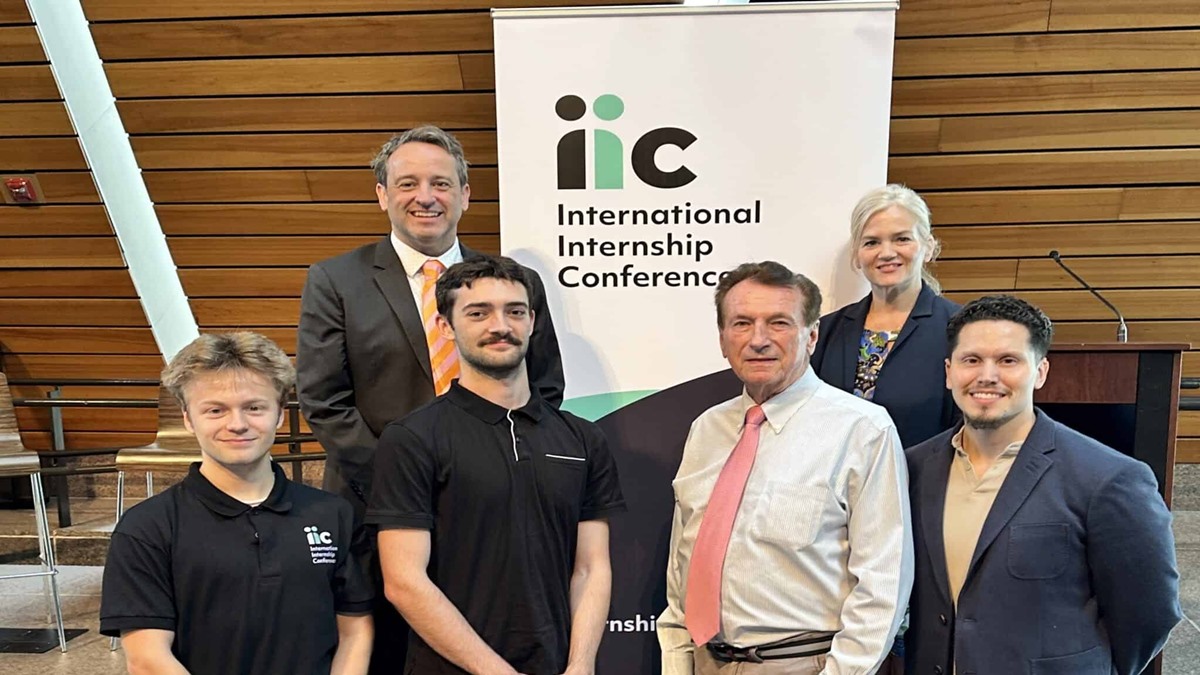 Man versus machine
Minneapolis: The role of artificial intelligence in global internships took center stage at the 2025 International Internship Conference (IIC), where educators, industry leaders, and policymakers gathered to explore how technology can transform experiential learning.
Read More: Visa Denials Top List of Challenges for U.S. English Language Teaching Providers
The Debate: AI as Ally or Adversary?
The conference’s flagship event, the “Man vs Machine” debate, moderated by Maureen Manning, featured four experts with contrasting perspectives:
- Kate Moore (Global Career Center) framed AI as an enabler that can expand access and efficiency without replacing human mentors.
- Balaji Krishnan (University of Memphis) stressed the urgency of ethical frameworks to govern AI-driven internship design.
- Greg Holz (University of Central Missouri) pointed to automation benefits, noting AI can handle scheduling and logistics, freeing mentors for meaningful engagement.
- Rishab Malhotra (AIDO) issued a caution: “AI can’t replicate empathy or intercultural sensitivity- core elements of global internships.”
Key Themes Emerging from IIC 2025
- Human-Tech Harmony: Participants agreed that AI should amplify-not overshadow-the human dimensions of mentorship, reflection, and cultural understanding.
- Cross-Sector Collaboration: Institutions like International Experience Canada were highlighted as models for government-education-industry partnerships in advancing work-integrated learning.
- Looking Ahead to IIC 2026: The next conference will take place in Spain at Universidad Camilo José Cela, with a focus on critical thinking, adaptability, and complexity management in an AI-driven world.
Why This Matters
Internships are more than job training they shape professional identities. While AI tools promise scalability and efficiency, delegates warned that oversight is critical to preserve interpersonal growth. Ethical guardrails must ensure that technology supports, rather than replaces, human mentorship and intercultural learning.
Read Also:Record Number of International Students in Japan in 2024 Surpasses Pre-Pandemic Levels
“Tech knowledge alone is not enough. We must support students to think critically, navigate complexity, and adapt with agility,” said Maria Angeles Fernandes Lopez of Universidad Camilo José Cela.